-
This event received financial support and help from the following organizations:
- Joint School with EU/ME and GT2L October 27-28, 2026
- Advanced Optimization Tools for Vehicle Routing, Transport and Logistics
- Optimization Event: Revolutionizing Problem-Solving with new decomposition approaches and IA
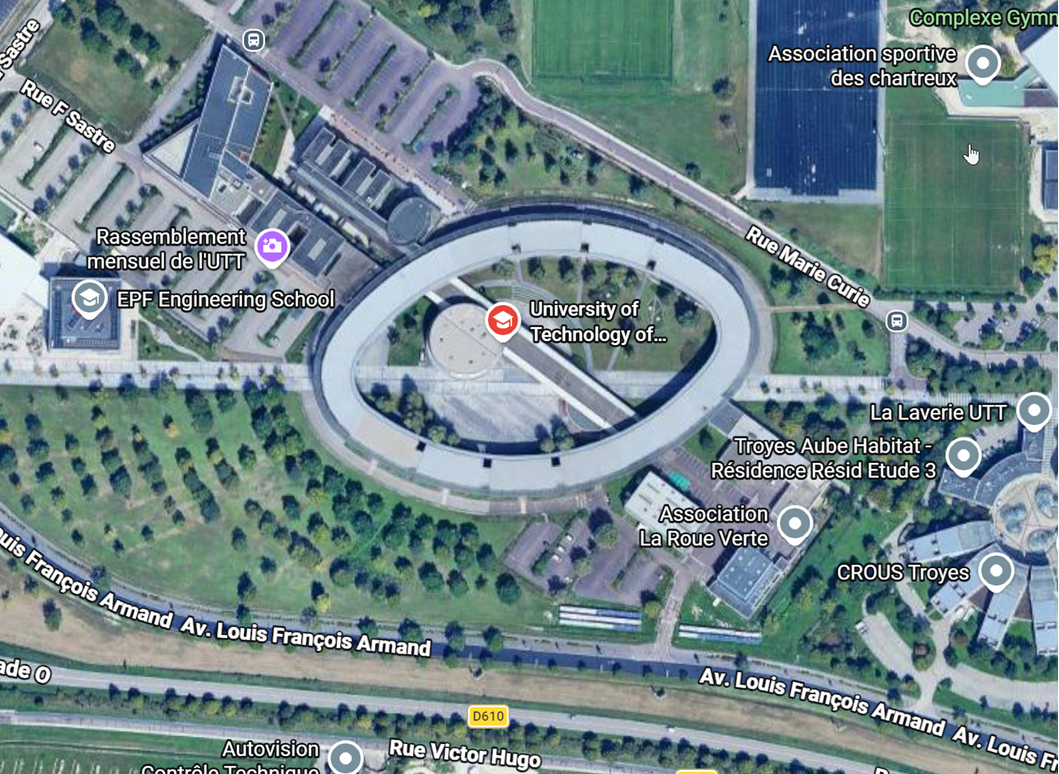
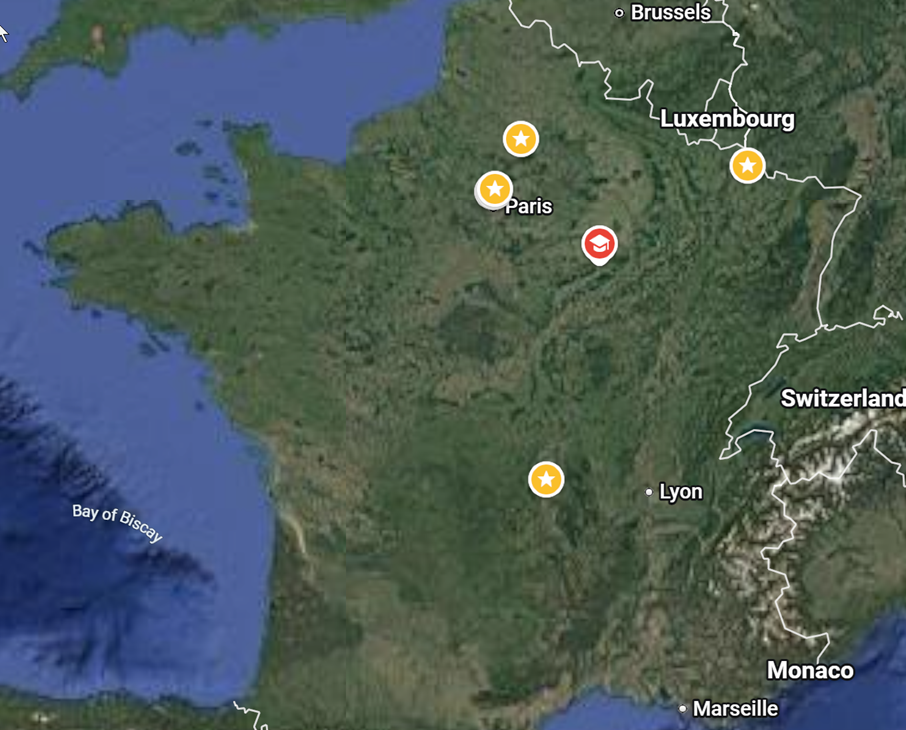
- Location: Troyes - 27-28 October 2026
- The event has been cancelled due to technical issues.
-





-
-
A GT2LxEUME autumn school will take place in Troyes on 27 and 28 October 2026 and focuses on advanced optimization tools for vehicle routing, transportation, and logistics. The program combines lectures and hands-on workshops led by leading researchers and practitioners. The first day is dedicated to Branch-Cut-and-Price (BCP) algorithms, with tutorials and practical sessions conducted by Aurelien Froger, covering advanced exact methods for vehicle routing problems and the use of VRPSolver. Participants may also attend a parallel workshop on quantum computing for optimization / a parallel session on PhD presentations. The second day explores the growing role of Generative AI and AI agents in optimization, with lectures and workshops led by Benjamin Dalmas. Topics include LLM-based model generation, AI-assisted heuristic design, autonomous optimization workflows, and the opportunities and limitations of these emerging technologies. Practical sessions will allow participants to experiment with LLM-driven optimization on classical routing problems such as the TSP and CVRP. The event offers a unique opportunity to discover both state-of-the-art optimization techniques and the latest AI-powered approaches shaping the future of operations research.
This joint international event is coordinated by EUME/GT2L. Organizers will issue certificates of participation for doctoral schools. As seats are limited, we encourage you to register as soon as possible.
Welcome to Troyes !
-
The organization is managed by EUME and theGT2L working group.
- Day one is intended for those wishing to discover New decomposition approaches who will be able to create their first quantum program/branch and cut program with the help of Aurelien Froger.
- Day two is intended for those wishing to discover New AI tools for no-code optimization who will be able participants to experiment with LLM-driven optimization workflows on classical problems such as TSP and CVRP with Benjamin Dalmas.
Event organized by: - Marc Sevaux (Executive committee member of EUME) - Caroline Prodhon (Executive committee member of GT2L) - Philippe Lacomme (Executive committee member of EUME and GT2L)
-
- EURO (The Association of European Operational Research Societies)
- Labsticc
- GDR RO (Groupement de Recherche en Recherche Operationnelle)
- LIMOS (Clermont-Ferrand Computer Science Laboratory)
- EU/ME (EURO Working Group on Metaheuristics)
- UTT (University of Technology of Troyes)
- LIST3N (Computer Science and Digital Society - UTT)
- EURO (The Association of European Operational Research Societies)
-
-
Aurelien Froger
Bordeau
-
-
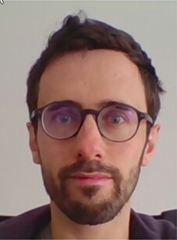
Aurelien Froger is a French researcher and associate professor at the University of Bordeaux. He is a member of the Institut de Mathematiques de Bordeaux and specializes in combinatorial optimization and operations research. His work focuses on logistics, transportation, and energy management, with major contributions to electric vehicle routing and charging optimization. Through his research and publications, he helps advance optimization methods for sustainable transportation and decision-support systems.
-
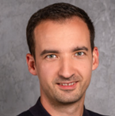
- Benjamin Dalmas
iGrafx
-
-
Benjamin Dalmas is AI and Process Intelligence Research Lead at iGrafx, and Associate Professor at the University of Montreal. His research focuses on the optimization and predictive analysis of process models and complex systems, at the intersection of operations research, process mining, and machine learning. His dual academic and industry role gives him a working view of where new techniques, including LLM- and agent-based approaches, currently translate into deployable systems
-
Aurelien Froger
-
Registration Deadline: October 10, 2026
Registration Fee: 150 Euros
The fee covers coffee breaks, lunch, and free access to classes and practival works.
Accomodation is not included .
How to register?
- Step 1: Complete the document found here.
- Step 2: Payment must be made by bank transfer.
Note: After registration, you will receive payment details by email.
A certificate of participation will be provided to doctoral students.
-
- October 27: Day 1
- 8:30-9:00:
- Welcome of participants
- 9:00-11:00:
- A Tutorial on Branch-and-Cut-and-Price Algorithms with a Focus on Vehicle Routing Problems - Speakers: A. Froger)
- :
- This tutorial provides an introduction to Branch-Cut-and-Price (BCP) algorithms. It covers the fundamentals of column generation, branch-and-price, and cutting planes, while emphasizing key implementation aspects and proven techniques. It gives participants a high-level overview of advanced generic components such as stabilization, strong branching, reduced-cost fixing, as well as several specific techniques for vehicle routing problems including bucket graph-based labeling algorithms, (dynamic) partially elementary path relaxation, enumeration of elementary routes, and specialized cuts. The tutorial also introduces VRPSolver, an advanced BCP solver, designed to reduce the implementation effort required to develop efficient exact algorithms for vehicle routing and related problems. VRPSolver relies on a graph-based modeling framework in which variables induced by resource-constrained paths are mapped to user-defined objective function and constraints in the master formulation. Its pricing solver, which can also be used as a standalone component, relies on a generic interface. It provides a library of classical resources and, in its new version, allows users to define new resources for path feasibility and cost evaluation, thereby extending its scope and enabling customization.
- 11:00-11:30:
- Coffee
- 11:30-12:30:
- Hands-on sessions and exercises by Aurelien Froger
- :
- The tutorial concludes with hands-on sessions and exercises, aimed at giving participants practical experience in modeling and solving optimization problems with a BCP algorithm.
- - Lunch Break -
- 14:00-16:30:
- Hands-on workshop for modeling and solving optimization Room 1
Problems resolution with a BCP algorithm - 25 students
- 14:00-16:30:
- Session for PhD Student presentationRoom 2
Presentation of subject of research - 25 students
- 16:30-17:00:
- Coffee
- 17:00-19:30:
- Hands-on workshop for modeling and solving optimization Room 1
Problems resolution with a BCP algorithm - 25 students
- 17:00-19:30:
- Session for PhD Student presentationRoom 2
Presentation of subject of research - 25 students
- Thursday May 28: Day 2
- 8:00-8:30:
- Coffee
- 8:30-10:00:
- Optimization in the Era of GenAI and AI Agents by Benjamin Dalmas - Room A1
- :
- Generative AI is quietly changing how optimization gets done. Mathematical models can now be produced from natural-language descriptions in seconds. Heuristics are being co-designed by language models and evaluators, and recently this process has yielded genuinely new mathematical objects and algorithms. Coding agents make it possible to assemble entire optimization pipelines with a fraction of the engineering effort once required. This session is designed for researchers and students who want to understand what these tools can and cannot do, and where the research frontier currently sits. A structured tour of the field in three parts: (1) how large language models and AI agents actually work, at a level sufficient to reason about their behaviour on technical tasks; (2) the spectrum of their current uses in optimization - as model writers, solvers, heuristic designers, analysts, and autonomous pipelines; and (3) the limits, risks, and open problems, including verification, reproducibility, and the line between discovery and memorization.
- 10:00-10:30:
- Coffee
- 10:30-12:30:
- Hands-on workshop on LLM-driven optimization workflows with Benjamin Dalmas
- - Lunch Break -
- 13:30-16:30:
- Hands-on workshop on LLM-driven optimization workflows with Benjamin Dalmas
-
- For general questions: (emergingoptimization@gmail.com) - How to participate: (caroline.prodhon@utt.fr)
-
- Caroline Prodhon
- Philippe Lacomme
-
Le Royal ibis budget Troyes Est Brit Hotel Les Comtes de Champagne Appart'Hôtel Saint Georges SmartAppart Troyes
GT2L 2026Visitors count: 135
-